Watch the video recently published by Wiley about our paper and discover the answer
How can antiviral restriction factors be engineered to become catalytically self-sufficient?
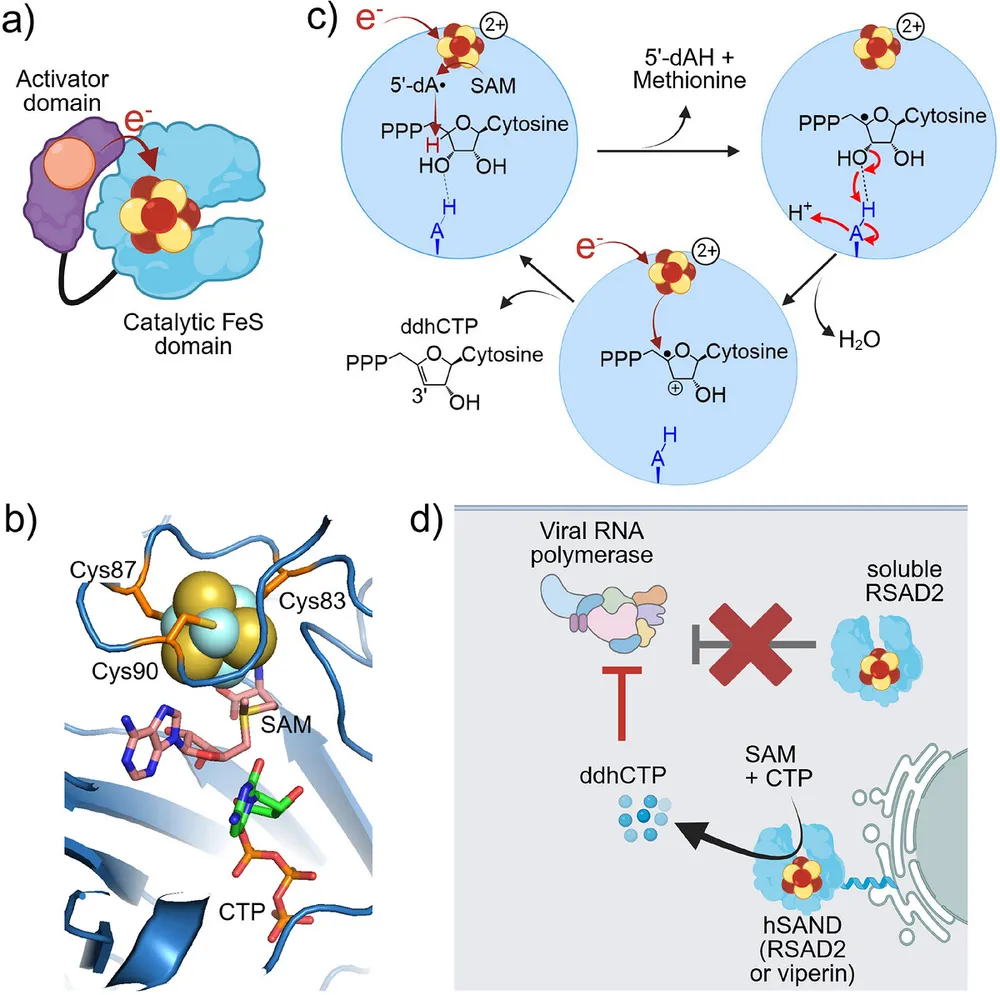
This work investigates the electron transfer process between CYB5R3 and RSAD2 (viperin), two proteins involved in the production of an antiviral nucleotide analogue.
A multidisciplinary approach was used, combining biochemical and molecular biology experiments with metabolomics, structural modelling, molecular dynamics, mutagenesis and NMR spectroscopy.
In particular, our researchers at CERM/CIRMMP have harnessed solution NMR spectroscopy to provide a detailed and unprecedented view of the interaction between CYB5R3 and RSAD2, while simultaneously probing the redox state of their cofactors and elucidating the molecular events underlying substrate binding and transformation at RSAD2. This approach offers a unique window into the dynamic interplay between protein-protein interactions, cofactor redox chemistry, electron transfer, and substrate transformation, providing a comprehensive molecular picture of this complex redox system and shedding new light on the molecular mechanisms underlying its antiviral activity.
Watch the video here: https://onlinelibrary.wiley.com/doi/full/10.1002/anie.5423408