CERM/CIRMMP is a leading centre for the development of innovative strategies in drug and vaccine design. By leveraging high-resolution structural information, we investigate the mechanisms of protein targets to guide and optimize therapeutic interventions.
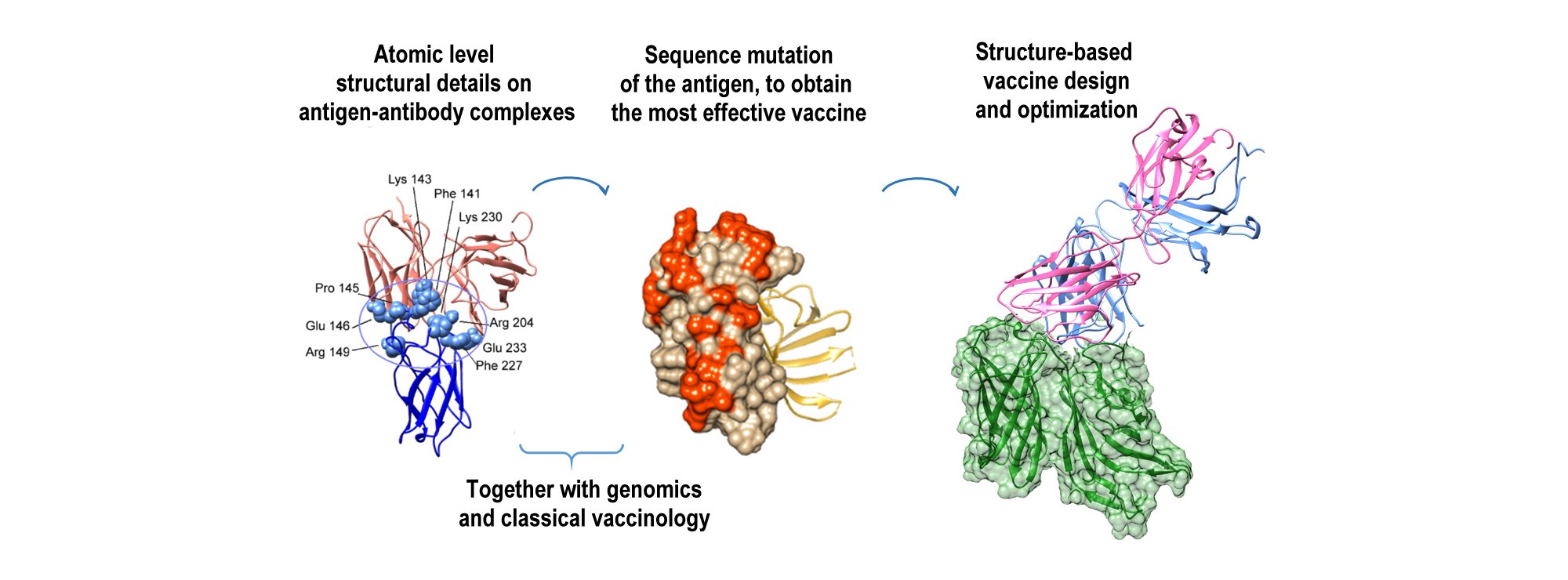
In vaccine research, CERM/CIRMMP applies detailed structural characterization of antigens and their interactions with antibodies to design vaccines that provide broad and effective protection. A key achievement, in collaboration with GSK Vaccines, was the development of a vaccine targeting over 500 variants of Neisseria meningitidis serogroup B (MenB). Solution and solid-state NMR techniques are used to map the residues recognized by protective antibodies, informing the design of antigens with improved stability and immunogenicity.
In drug discovery, the centre combines expertise from multiple disciplines—structural biology, chemistry, and biochemistry—to understand how small molecules or peptides interact with specific protein targets. This knowledge allows researchers to design therapeutics with high precision. Current projects include investigating serine-rich repeat glycoproteins from Streptococcus gordonii, which are important for bacterial adhesion; designing cyclic peptides (CP2) that mimic sugar structures on Neisseria gonorrhoeae, helping the immune system recognize the pathogen; and characterizing small molecules that bind to proteins from fungal (Candida albicans) and bacterial (Klebsiella pneumoniae) pathogens.
To understand these interactions at a molecular level, the team uses NMR spectroscopy, which provides information about the structure and dynamics of proteins in solution; X-ray crystallography, which reveals atomic-level 3D structures of protein-ligand complexes; and complementary biochemical assays that test functional effects in vitro. Together, these techniques clarify how compounds interact with therapeutic targets such as VDAC1, a mitochondrial channel involved in cell survival, and fascin, a protein that promotes cancer cell migration. Insights from these studies guide the rational development of antimetastatic, anti-infective, and immune-modulating agents, ensuring that therapies are both effective and specific.
CERM/CIRMMP is also at the forefront of emerging therapeutic technologies. Proteolysis targeting chimera (PROTAC) molecules represent a novel approach to selectively degrade disease-associated proteins. While widely applied in oncology, their antiviral potential remains underexplored. PROTACs harness the cell’s natural protein degradation machinery to selectively eliminate disease-related proteins. Our team has developed a PROTAC targeting SARS-CoV-2 3-chymotrypsin-like protease (3CLPro) and Coxsackievirus CVB3 (3CPro), synthesized in the laboratory of Prof. Trabocchi (DICUS). Its interactions with these viral proteases were characterized at CERM, and its degradation efficiency in cellular models was evaluated in collaboration with the University of Verona, demonstrating potential as a broad-spectrum antiviral agent.
Selected publications: