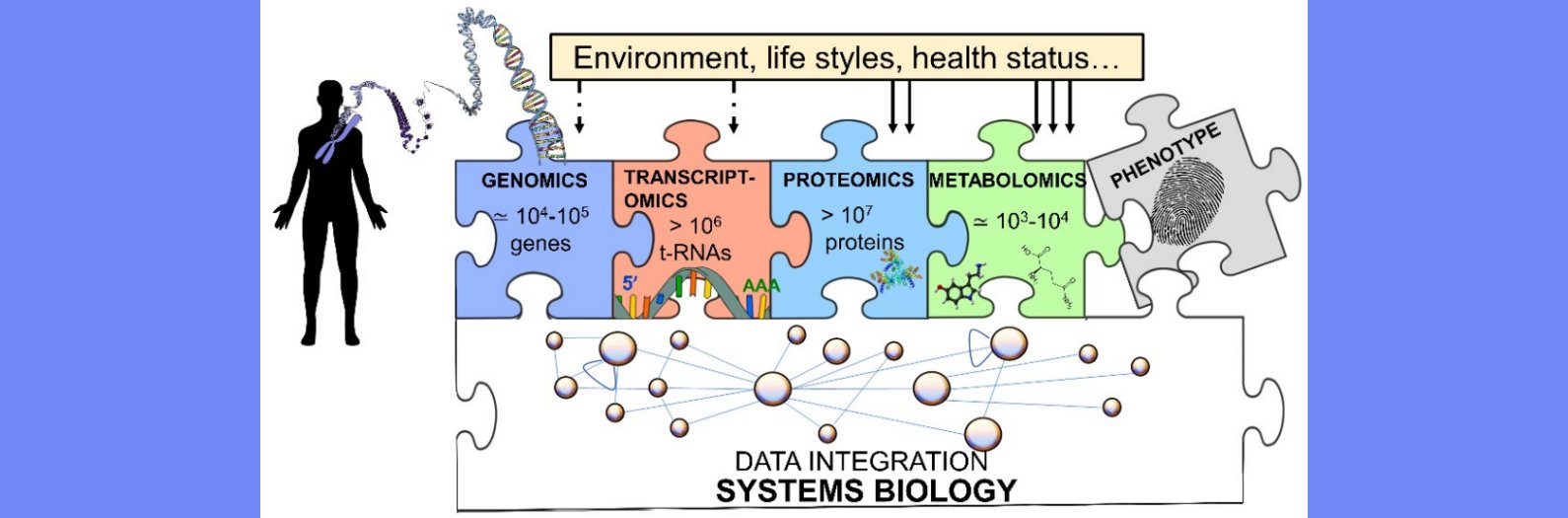
Metabolomics deals with the Omic analysis of low molecular weight metabolites present in biological samples. Among the analytical techniques used in this field, NMR spectroscopy plays a central role thanks to its intrinsic quantitative nature, high reproducibility, and ability to rapidly generate detailed metabolic fingerprints. Current applications of metabolomics span from biomedicine (analyzing biofluids, tissues and cells) to agricultural sciences (analyzing food matrices).
A typical metabolomic workflow includes a pre-analytical phase, which spans from sample collection to storage, and the analytical phase, including sample preparation and NMR measurements. Each step in these phases critically affects the accuracy and reproducibility of the results, making standardized and validated procedures essential for high-quality analyses. NMR-based metabolomic analysis of biofluids, cells, and tissues provides a dynamic portrait of the metabolic status of an individual, permitting the simultaneous identification and quantification of metabolites and small intermediate molecules. In the biomedical field, the application of NMR-based metabolomics can be successfully
exploited in different pathological contexts, providing significant information on a wide range of pathologies, such as breast cancer, colorectal cancer, cardiovascular diseases, Down syndrome, coeliac disease. The contribution of 1H NMR metabolomics to precision medicine includes the characterization of the metabolic signature of diseases for diagnostic and prognostic purposes as well as the definition of individual susceptibility to medical and influence of environmental factors.
In 2024, research efforts were especially focused on two main areas: investigating the effects of anticoagulation drugs in elderly patients with atrial fibrillation, and exploring how sperm membrane composition and serum lipoprotein profiles influence male reproductive potential. Additionally, by integrating metabolomics with proteomics, CERM/CIRMMP researchers characterized the molecular signature of colitis at both tissue and fecal levels in a mouse model. This work revealed key biomarkers for distinguishing symptomatic and presymptomatic stages of inflammation, underscoring the diagnostic potential of metabolomics for inflammatory diseases.
Another emerging research direction involves the use of metabolomics to study the impact of therapeutic interventions. In this context, CERM/CIRMMP investigated the effects of direct and alternating current electrostimulation on the metabolome of 3D bioconstructs composed of fibroblasts and keratinocytes within a collagen matrix, unveiling potential anti-inflammatory mechanisms. Beyond human health, NMR metabolomics is also applied to animal studies. For instance, serum metabolomic profiling was used to demonstrate the positive effects of boron supplementation in newborn dairy calves, providing insights into early-life nutritional interventions.
Selected publications:
(1) Vignoli, A., Ghini, V., Meoni, G., Licari, C., Takis, P. G., Tenori, L., Turano, P., Luchinat, C. High-throughput metabolomics by 1D NMR. Angew. Chem. Int. Ed., 2019, 58, 968–994. https://doi.org/10.1002/anie.201804736
(2) Takis, P. G., Ghini, V., Tenori, L., Turano, P., Luchinat, C. Uniqueness of the NMR approach to metabolomics. TrAC Trends Anal. Chem., 2019, 120, 115300. https://doi.org/10.1016/j.trac.2019.115300
(3) Bernini, P., Bertini, I., Luchinat, C., Nincheri, P., Staderini, S., Turano, P. Standard operating procedures for pre-analytical handling of blood and urine for metabolomic studies and biobanks. J. Biomol. NMR, 2011, 49, 231–243. https://doi.org/10.1007/s10858-011-9489-1
(4) McCartney, A., Vignoli, A., Biganzoli, L., Love, R., Tenori, L., Luchinat, C., Di Leo, A. Metabolomics in breast cancer: A decade in review. Cancer Treat. Rev., 2018, 67, 88–96.
https://doi.org/10.1016/j.ctrv.2018.04.012
(5) Vignoli, A., Gori, A. M., Berteotti, M., Cesari, F., Giusti, B., Bertelli, A., Kura, A., Sticchi, E., Salvadori, E., Barbato, C., Formelli, B., Pescini, F., Marcucci, R., Tenori, L., Poggesi, A. The serum metabolomic profiles of atrial fibrillation patients treated with direct oral anticoagulants or vitamin K antagonists. Life Sci., 2024, 351, 122796. https://doi.org/10.1016/j.lfs.2024.122796
(6) Di Nisio, A., et al. Non-canonical catalytic functions and their implications in disease. Int. J. Mol. Sci., 2024, 25, 1. https://doi.org/10.3390/ijms25010001
(7) Shimshoni, E., Solomonov, I., Sagi, I., Ghini, V. Integrated metabolomics and proteomics of symptomatic and early presymptomatic states of colitis. J. Proteome Res., 2024, 23, 4, 1420–1432. https://doi.org/10.1021/acs.jproteome.3c00860
(8) Di Pietro, B., Villata, S., Dal Monego, S., Degasperi, M., Ghini, V., Guarnieri, T., Plaksienko, A., Liu, Y., Pecchioli, V., Manni, L., Tenori, L., Licastro, D., Angelini, C., Napione, L., Frascella, F., Nardini, C. Differential anti-inflammatory effects of electrostimulation in a standardized setting. Int. J. Mol. Sci., 2024, 25, 18, 9808. https://doi.org/10.3390/ijms25189808
(9) Adam, A. A.-A., Baspinar, N., Vignoli, A., Meoni, G., Tenori, L., Basoglu, A., Gullersoy, E., Bicici, R. O. Effects of boron supplementation on dairy calves’ health: A metabolomics study. Assiut Vet. Med. J., 2024, 70, 180, 10–25. https://doi.org/10.21608/avmj.2023.218730